Group Riding Hub
🧭Ride Orientation & the 1–2 Second RuleOrientación y la regla de 1–2 segundos+
When you ride solo, you ride at your own pace. In a group, we ride in a staggered formation and obey all traffic rules.
Cuando ruedas solo, vas a tu propio ritmo. En grupo, rodamos en formación escalonada y respetamos todas las reglas de tránsito.
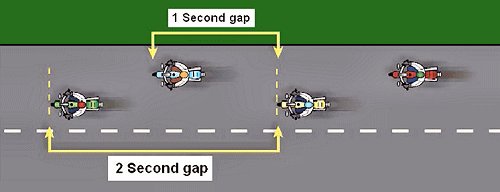
Always keep the 2 & 1 second rule: stay 2 seconds behind the bike directly in front of you, and 1 second behind the bike in the other tire track. If you can only manage one, the 2-second rule matters most. Studies show it's the optimal distance to react and stop safely.
Mantén siempre la regla de los 2 y 1 segundos: 2 segundos detrás de la moto justo enfrente de ti y 1 segundo detrás de la moto en la otra huella. Si solo puedes con una, la regla de los 2 segundos es la más importante. Los estudios muestran que es la distancia óptima para reaccionar y frenar con seguridad.
Use your signals and hand gestures when turning, and check both mirrors and glance behind you in the direction of the turn. If turns at group pace give you trouble, ride near the back and take them at a comfortable speed, but stay in your own tire track. Once the turn is done, return to your 2-second gap.
Usa tus direccionales y señales de mano al dar vuelta, revisa ambos espejos y voltea en dirección de la vuelta. Si las vueltas al ritmo del grupo te cuestan, ve atrás y tómalas a una velocidad cómoda, pero mantente en tu propia huella. Al terminar la vuelta, regresa a tu distancia de 2 segundos.
🏍️Group Riding & Staggered FormationRodada en grupo y formación escalonada+
In a group we ride staggered: the lead bike rides the left tire track, the second bike the right track (1 second back), the third in the left track (2 seconds back), and so on, alternating tracks while keeping the 1- and 2-second gaps.
En grupo rodamos escalonados: la moto líder en la huella izquierda, la segunda en la derecha (1 segundo atrás), la tercera en la izquierda (2 segundos atrás), y así, alternando huellas y manteniendo las distancias de 1 y 2 segundos.
Topes (speed bumps): keep those gaps even tighter when slowing for topes. Larger bikes may take a tope at an angle, so never pull up beside the bike ahead of you. The risk of contact rises sharply.
Topes: mantén las distancias aún más presentes al frenar para los topes. Las motos grandes a veces toman el tope en ángulo, así que nunca te emparejes junto a la moto de adelante. El riesgo de contacto sube mucho.
Updated ride rules & etiquette:
- All rides are club rides, open to members and invited guests (about 3 per year). Let the Lead Road Captain know before the start if you bring a guest.
- General speed maximums: 110 km/h on toll highways, 100 km/h on major free roads, 90 km/h on narrower secondary roads.
- Single file for bad topes, poor road conditions, or to let traffic behind pass.
- Stay aware of the riders in front of and behind you, and leave room for them when passing.
- Trikes ride at the back, just ahead of the sweep.
- We never stop or impede surrounding traffic during rides, except, if necessary, in an accident.
- Todas las rodadas son del club, abiertas a miembros e invitados (unas 3 al año). Avisa al Capitán de Ruta líder antes de salir si traes invitado.
- Velocidades máximas: 110 km/h en autopistas de cuota, 100 km/h en carreteras libres principales, 90 km/h en secundarias más angostas.
- Fila única para topes difíciles, mal camino o para dejar pasar al tráfico de atrás.
- Mantente atento a quienes van delante y detrás, y déjales espacio al rebasar.
- Los triciclos van atrás, justo delante del cierre (sweep).
- Nunca detenemos ni obstruimos el tráfico durante las rodadas, salvo, si es necesario, en un accidente.
🛣️Entering & Exiting the Roadway TogetherEntrar y salir del camino en grupo+
Pulling onto and off the road as a group takes a little coordination. We call it the "Grexit." Done right, the whole group flows on and off cleanly, with no one stranded in traffic.
Entrar y salir del camino en grupo requiere algo de coordinación. Le decimos el "Grexit". Bien hecho, todo el grupo entra y sale limpio, sin que nadie quede atrapado en el tráfico.
Entering the roadway: line up in the same group position you'll ride in, with the lead at the front, facing the direction you're heading. When the lead signals GO, everyone moves out and turns at once, settling straight into staggered formation.
Entrar al camino: fórmate en la misma posición de grupo en la que vas a rodar, con el líder al frente y en la dirección hacia donde van. Cuando el líder dé la señal de SALIDA, todos avanzan y dan la vuelta al mismo tiempo, acomodándose de inmediato en formación escalonada.
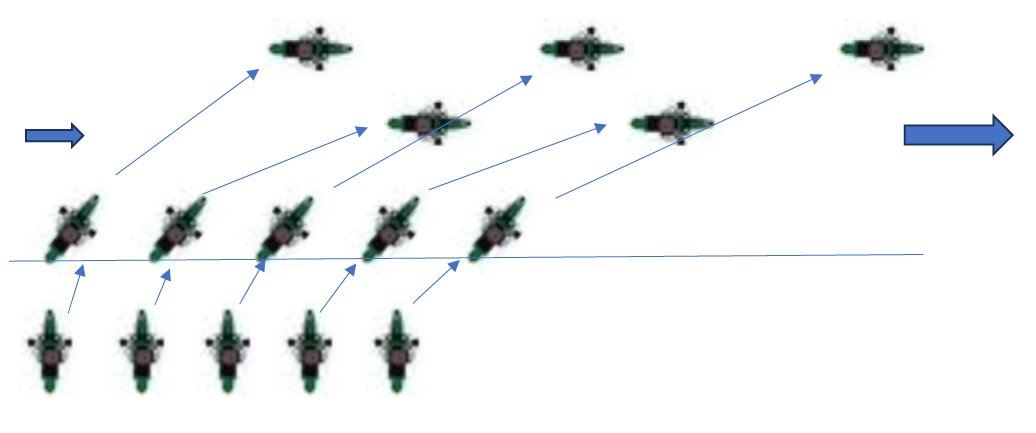
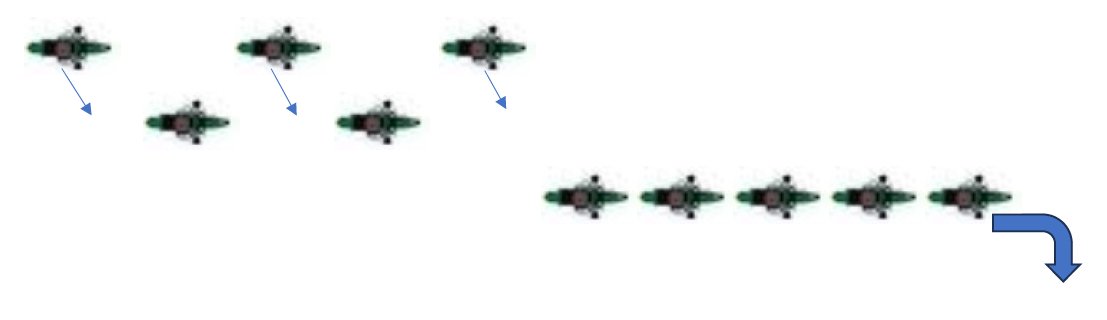
Exiting the roadway: everyone moves to the right and gets off the road and out of the flow of traffic as soon as it's safe. Keep the riders behind you in mind — don't stop short or block them from getting fully off the road. As always, keep your situational awareness.
Salir del camino: todos se recorren a la derecha y se orillan fuera del camino y del flujo del tráfico en cuanto sea seguro. Ten presente a quienes vienen detrás: no te detengas de golpe ni les bloquees el paso para orillarse por completo. Como siempre, mantén tu conciencia situacional.
✋Hand & Foot SignalsSeñales de mano y pie+
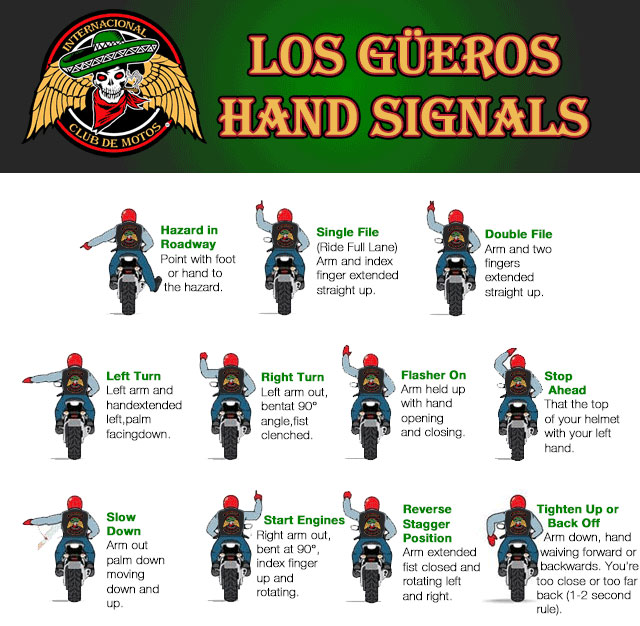
Hand signals are passed back from the lead all the way to the sweep. A break in the chain means riders further back can't react to a hazard in time. Some signals (like Flasher On and Stop Ahead) are passed forward: give a brief toot of your horn first, then the signal, so the rider ahead checks their mirrors.
Las señales de mano se pasan desde el líder hasta el cierre. Si se rompe la cadena, los de atrás no alcanzan a reaccionar a un peligro. Algunas señales (como Direccional Encendida y Alto Adelante) se pasan hacia adelante: da un toque breve de claxon y luego la señal, para que quien va delante revise sus espejos.
Common signals include:
- Hazard in roadway: point with your hand (left side) or foot (right side, keeping your hand on the throttle).
- Single file: arm up with index finger extended.
- Double file: two fingers extended to return to staggered.
- Left / right turn: for intersections, ramps and lane changes.
- Stop ahead: tap the top of your helmet.
- Start engines: given by the lead and echoed back when ready.
- Tighten up / back off: to fix your 1–2 second spacing.
- Peligro en el camino: señala con la mano (lado izquierdo) o el pie (lado derecho, manteniendo la mano en el acelerador).
- Fila única: brazo arriba con índice extendido.
- Doble fila: dos dedos extendidos para volver a escalonado.
- Vuelta izquierda / derecha: para cruces, rampas y cambios de carril.
- Alto adelante: toca la parte superior del casco.
- Arrancar motores: la da el líder y se devuelve al estar listo.
- Acércate / sepárate: para ajustar tu distancia de 1–2 segundos.
🍞Bread Crumbs: No Rider Left BehindMigajas: nadie se queda atrás+
Bread crumbs is all about making sure no rider gets left behind. Beyond keeping your spacing with the bikes in front, keep an eye on the rider behind you. Every rider is responsible for the one behind them.
Las migajas (bread crumbs) se tratan de que ningún rodador se quede atrás. Además de cuidar tu distancia con los de adelante, vigila a quien va detrás de ti. Cada rodador es responsable del que le sigue.
If you lose sight of the rider behind you:
- At a turn or intersection the group is taking, stop and wait for them to catch up.
- On a curvy road, slow down until they reappear, then rejoin. Never ride beyond your limits to catch up.
- If you lose the rider behind you, pull over to the shoulder and stop. This will cause a chain reaction that brings the entire group to a stop.
- En una vuelta o cruce que toma el grupo, detente y espera a que te alcancen.
- En camino con curvas, baja la velocidad hasta que reaparezcan, y reincorpórate. Nunca ruedes más allá de tus límites por alcanzar.
- Si pierdes a quien va detrás de ti, oríllate al acotamiento y detente. Esto provocará una reacción en cadena que detendrá a todo el grupo.
↩️Lane Keeping in TurnsMantener el carril en las vueltas+
Riding solo, it's normal to hug the inside of the lane through turns. In a staggered group, hugging the inside breaks the 2-second gap with the rider behind you, so hold your tire track through the turn instead.
Rodando solo, es normal pegarse al interior del carril en las vueltas. En grupo escalonado, pegarse al interior rompe la distancia de 2 segundos con quien va detrás, así que mantén tu huella durante toda la vuelta.
If you can't hold your tire track through turns yet, ride at the back of the group and take turns slower while keeping your position in the lane. Back on the straightaway, regain your two-second gap. With practice, you'll master it.
Si todavía no puedes mantener tu huella en las vueltas, ve atrás del grupo y tómalas más despacio sin perder tu posición en el carril. En la recta, recupera tu distancia de dos segundos. Con práctica, lo dominarás.